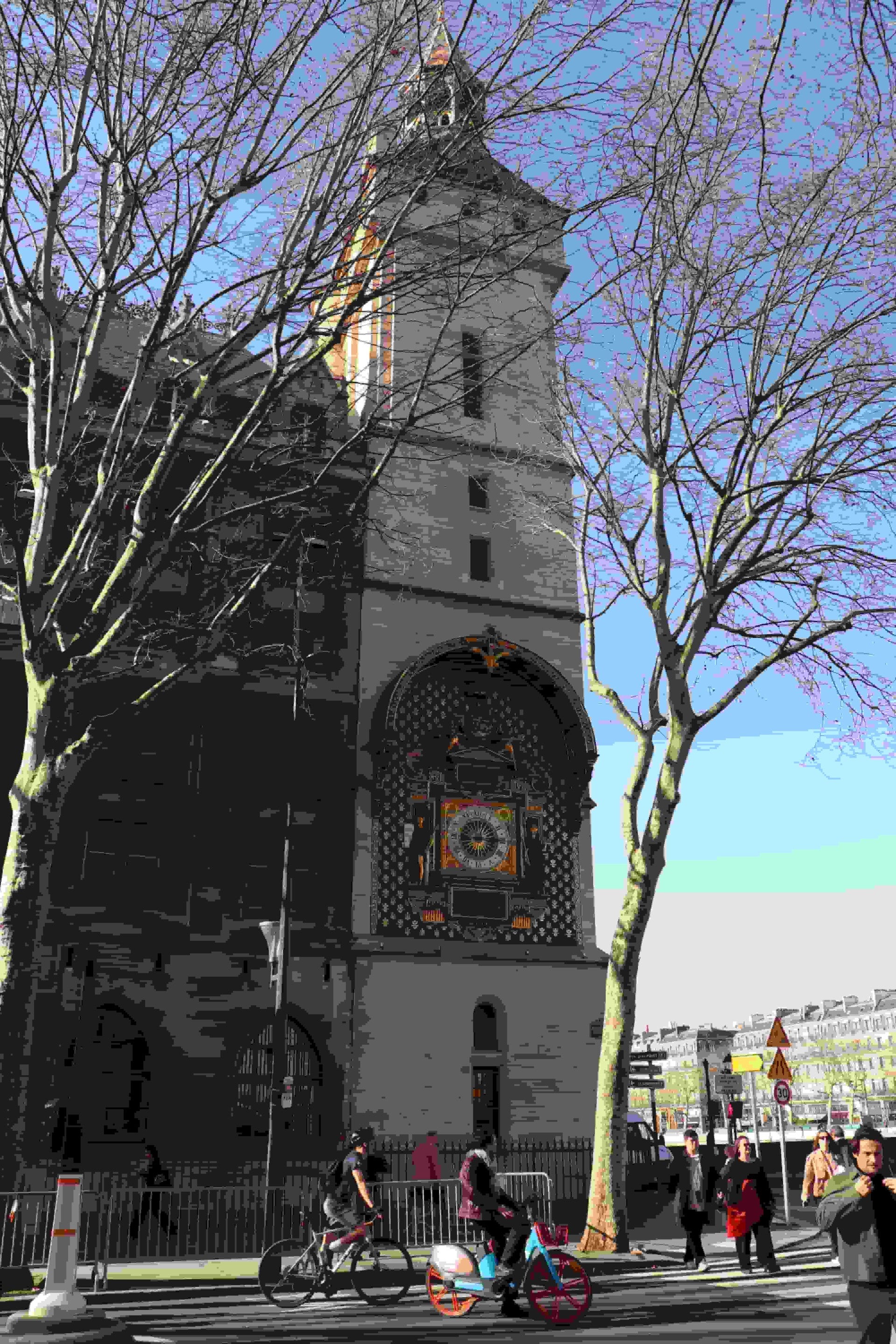
The Conciergerie, Paris
Rising from the banks of the Seine on the Île de la Cité, the Conciergerie is one of the most dramatic and historically charged monuments in all of Paris. A royal palace in the Middle Ages, a revolutionary prison during the Terror, and the last address of Marie Antoinette before her execution, it is a building that carries the full weight of French history within its Gothic walls.
History
Origins: A Royal Palace
The Conciergerie takes its name from the 'concierge' — the chief steward of the royal household. Built by Philip the Fair in the early 14th century, it was part of the original royal palace on the Île de la Cité. When the kings abandoned it for the Louvre, it gradually became a law court and prison.
The Revolutionary Prison
Between 1793 and 1795, the Conciergerie served as the principal holding prison of the Revolutionary Tribunal. During the Terror, thousands of prisoners passed through its gates, the vast majority condemned to death and guillotined on the Place de la Révolution.
Marie Antoinette
Marie Antoinette arrived at the Conciergerie on 2 August 1793. She spent her final 76 days in a small, damp cell, under constant guard. Found guilty of treason on 15 October 1793, she was guillotined the following day — 16 October 1793. She was 37 years old.
What to See
The Salle des Gens d'Armes
One of the finest Gothic halls in Europe, dating from 1302–1313. 64 metres long, supported by elegant Gothic columns — a powerful reminder of the scale and ambition of the medieval French monarchy.
The Cell of Marie Antoinette
The preserved cell where Marie Antoinette spent her final 76 days. Transformed into a chapel after the Restoration, with a reconstruction of the Queen's living quarters next door. Personal objects, portraits, and documents bring her story vividly to life.
The Revolutionary Rooms
A series of rooms dedicated to the French Revolution — the registers of prisoners, the reconstruction of the men's and women's galleries, and the stories of the thousands who passed through on their way to the guillotine.
The Tour de l'Horloge
Paris's first public clock (1353), decorated with allegorical figures representing Law and Justice. Admire it from the exterior on the Boulevard du Palais.
Opening Hours
Daily : 9:30am – 6:00pm
Last entry : 5:30pm
Closed : 1 January, 1 May, 25 December
Ticket Prices
Full price : €11.50
Reduced : €9.00
Free : Under 18s | EU residents under 26 | First Sunday of the month
Combined ticket : Conciergerie + Sainte-Chapelle — highly recommended
Buy Conciergerie tickets → (lien GetYourGuide)
Getting There
Address : 2 Boulevard du Palais, 75001 Paris
Metro : Cité (line 4)
RER : Saint-Michel – Notre-Dame (lines B/C)
Tips for Your Visit
Allow : 90 minutes to 2 hours
Combine with : Sainte-Chapelle — just steps away
Best time : Weekday mornings — avoid weekends and school holidays
Don't miss : The view of the four towers from the Pont au Change
FAQ
Who was imprisoned in the Conciergerie?
Among the most famous prisoners were Marie Antoinette, the poet André Chénier, the chemist Antoine Lavoisier, and Georges Danton. Eventually Robespierre himself was imprisoned here before his execution in July 1794, bringing the Terror to an end.
How long does a visit take?
90 minutes to 2 hours for a thorough visit.
Is the combined ticket worth it?
Yes — the Conciergerie and Sainte-Chapelle are just minutes apart on the Île de la Cité. The combined ticket offers excellent value and the contrast between the two monuments makes for a particularly rich visit.