Les Invalides Paris: Complete Guide to the Dome, Napoleon's Tomb & Army Museum
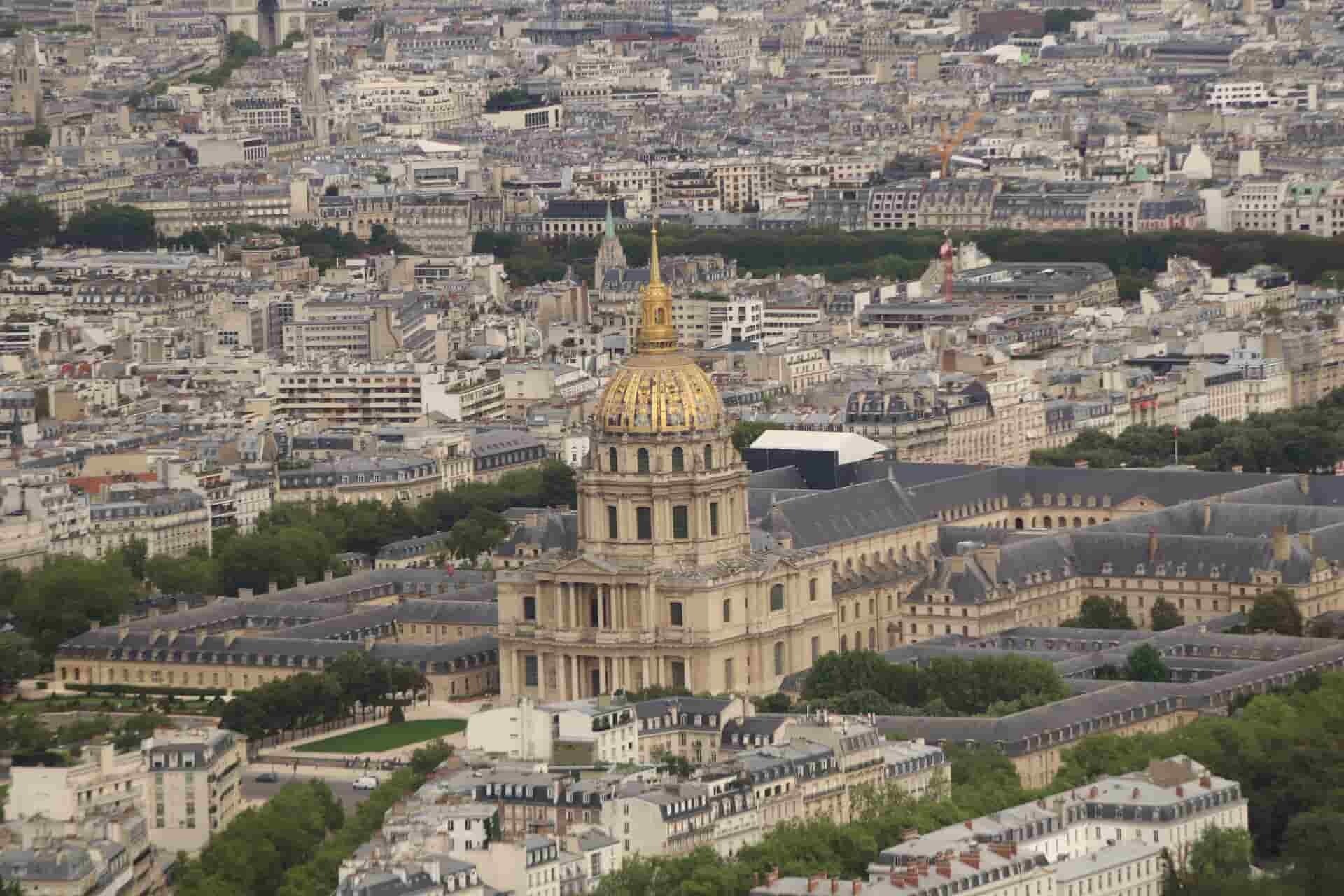
On the Left Bank of the Seine, just a short walk from the Eiffel Tower and the Pont Alexandre III, stands one of the most imposing and most visited monuments in Paris — Les Invalides. With its magnificent golden dome gleaming above the rooftops of the 7th arrondissement, its vast esplanade stretching down to the Seine, and its extraordinary complex of museums, churches, and historic buildings, Les Invalides is far more than a single monument — it is an entire world unto itself, containing within its walls some of the most important military history in France. Above all, it is the final resting place of Napoleon Bonaparte — the most celebrated and most controversial figure in French history — whose monumental tomb draws visitors from every corner of the globe.
The History of Les Invalides
Louis XIV and the Soldiers' Home
Les Invalides — whose full name is the Hôtel National des Invalides — was conceived and built by King Louis XIV, the Sun King, as a home for wounded and disabled soldiers of his armies. Before its creation, soldiers who had been injured or disabled in the king's service had no provision — they were left to beg in the streets or seek charity from the Church. Louis XIV, who was building the largest and most professional army in Europe, recognised that caring for his veterans was both a moral obligation and a practical necessity.
Construction of Les Invalides began in 1671 under the architect Libéral Bruant, and the complex was completed in 1676. At its peak, it housed over 4,000 soldiers — providing them with accommodation, food, medical care, and workshops where they could continue to work according to their abilities. It was one of the most ambitious social welfare projects of the 17th century, and it remained an active soldiers' home until well into the 20th century.
The Church and the Dome
From the beginning, Les Invalides included a church for its residents — the soldiers' church, known as the Église Saint-Louis-des-Invalides, which still stands today and is one of the finest military churches in France, its walls and vaults hung with the battle standards captured from France's enemies over four centuries.
But Louis XIV wanted something more — a personal royal chapel of supreme magnificence that would reflect the glory of his reign. He commissioned the greatest French architect of the age, Jules Hardouin-Mansart, to design a new church attached to the soldiers' church but entirely separate in character. The result — the Église du Dôme — is one of the masterpieces of French Baroque architecture, and its golden dome, completed in 1706, remains one of the most spectacular sights in Paris.
The dome of Les Invalides stands 107 metres high and is covered in genuine gold leaf — approximately 12.65 kilograms of gold were used in the most recent gilding in 1989. On sunny days, the dome blazes with a brilliance that can be seen from kilometres away, and it is one of the most instantly recognisable silhouettes in the Paris skyline.
Napoleon and Les Invalides
The transformation of Les Invalides into a national shrine began with Napoleon Bonaparte, who used the Église des Invalides for some of the most important ceremonies of his reign — including the distribution of the Légion d'Honneur in 1804. But it was after his death that Les Invalides became inseparable from Napoleon's legacy.
Napoleon died on the island of Saint Helena on 5 May 1821, in exile following his defeat at Waterloo. For nearly twenty years, his body remained on the island until, in 1840, King Louis-Philippe negotiated the return of Napoleon's remains to France — the so-called Retour des Cendres (Return of the Ashes). On 15 December 1840, Napoleon's coffin was brought in a solemn procession through the streets of Paris to Les Invalides, where it has remained ever since.
The construction of Napoleon's tomb — designed by the architect Louis Visconti — took nearly two decades to complete. It was inaugurated on 2 April 1861 under Napoleon III, the emperor's nephew. The result is one of the most monumental tombs ever created — a colossal sarcophagus of red Finnish quartzite resting on a base of green Vosges granite, placed in a circular crypt beneath the golden dome, surrounded by twelve figures representing Napoleon's greatest military victories.
Les Invalides in the World Wars
Les Invalides played an important role in both World Wars. During World War I, the esplanade in front of the building served as a mobilisation point, and the complex housed military headquarters and medical facilities. During World War II, Les Invalides was occupied by the German military — it was from here that German forces organised part of the occupation of Paris.
On 19 August 1944, as Allied forces approached Paris, a group of French resistance fighters seized Les Invalides — one of the first acts of the Paris Uprising that would culminate in the Liberation of Paris on 25 August 1944.
What to See at Les Invalides
The Dome Church and Napoleon's Tomb
The centrepiece of any visit to Les Invalides is the Église du Dôme — the domed church that houses Napoleon's tomb. Entering through the grand portal on the south side of the building, visitors find themselves in one of the most awe-inspiring interiors in Paris — a soaring circular space 27 metres in diameter, its walls decorated with captured enemy battle standards, its painted ceiling rising to the base of the golden dome far above.
At the centre of the church, a circular opening in the floor — surrounded by a balustrade of green marble — reveals the crypt below, where Napoleon's sarcophagus rests on its granite base. The scale of the tomb is deliberately overwhelming — Visconti designed it to be visible from the floor of the church above, so that visitors approaching the balustrade look down on the emperor's resting place from a position of dominance — yet the sheer size and grandeur of the sarcophagus immediately reverses this impression, making the viewer feel small and humble before the majesty of Napoleon's legacy.
Surrounding Napoleon's tomb in the crypt are smaller monuments to other members of the Bonaparte family and Napoleon's most celebrated marshals — including his son Napoleon II (the King of Rome, who died at twenty-one), his brothers Joseph and Jérôme, and the great marshals Turenne and Vauban.
The Army Museum — Musée de l'Armée
The Musée de l'Armée — the Army Museum — is one of the most important military museums in the world, and one of the finest museums of any kind in Paris. Its collections cover the entire history of French and world military history from the Stone Age to World War II, spread across multiple wings of the Les Invalides complex.
The Ancient Armour Collection — housed in the magnificent medieval-style galleries of the west wing, this extraordinary collection of armour, weapons, and military equipment from the 13th to the 17th centuries is one of the finest in the world. Highlights include the armour of King Henri II, the sword of François I, and an extraordinary collection of jousting armour.
The Oriental Armour Gallery — an exceptional collection of armour, weapons, and military equipment from Turkey, Persia, India, China, and Japan, including some of the finest samurai armour outside Japan.
The Modern History Galleries — covering French military history from Louis XIV to Napoleon III, with spectacular displays of uniforms, weapons, paintings, and personal objects belonging to the great figures of French military history.
The World War I Gallery — a moving and comprehensive account of the Great War, with particular focus on France's extraordinary sacrifice — over 1.4 million French soldiers killed between 1914 and 1918.
The World War II Gallery — the finest World War II museum in France, telling the story of the Fall of France in 1940, the Occupation, the Resistance, the Free French Forces under de Gaulle, and the Liberation. The gallery contains extraordinary personal objects, documents, weapons, and vehicles from the conflict.
The Église Saint-Louis-des-Invalides
Adjacent to the Dome Church but connected to it through a glass window, the Soldiers' Church — the Église Saint-Louis-des-Invalides — is one of the most atmospheric religious buildings in Paris. Its plain, austere interior contrasts dramatically with the gilded magnificence of the Dome Church next door, reflecting its original purpose as a place of worship for ordinary soldiers rather than royal ceremony.
The most remarkable feature of Saint-Louis is its extraordinary collection of battle standards — the flags and colours captured from France's enemies in four centuries of warfare, hanging from the walls and vaults of the church in a forest of faded silk and gold. Originally there were over 1,400 standards; many were burned during the Revolution to prevent their capture by the enemy, but those that remain — over 700 standards — create one of the most extraordinary military spectacles in the world.
The Musée de l'Ordre de la Libération
Within the Les Invalides complex, the Musée de l'Ordre de la Libération tells the story of the Compagnons de la Libération — the 1,038 individuals, five towns, and one military unit awarded the highest honour of Free France by General de Gaulle during World War II. The museum's collections include personal objects, documents, photographs, and weapons belonging to the men and women who fought for the liberation of France between 1940 and 1945.
The Esplanade des Invalides
Stretching north from the main facade of Les Invalides to the banks of the Seine, the Esplanade des Invalides is one of the grandest open spaces in Paris — a vast, tree-lined lawn 487 metres long and 250 metres wide, flanked by two rows of magnificent cannon that were captured during Napoleon's campaigns.
The esplanade offers some of the finest views of the Les Invalides facade in Paris — particularly beautiful in the early morning or late afternoon light when the golden dome catches the sun. It is also one of the best places in Paris to picnic in summer, when Parisians spread out on the grass to enjoy the sunshine in the shadow of one of the city's greatest monuments.
Practical Information: Visiting Les Invalides
Opening Hours
Les Invalides is open every day of the year:
April to October: 10:00 AM to 6:00 PM (last admission 5:30 PM)
November to March: 10:00 AM to 5:00 PM (last admission 4:30 PM)
Night openings: The museum stays open until 9:00 PM on the first Friday of each month
Closed: 1 January, 1 May, 25 December
Ticket Prices
Ticket
Price
Full museum access
€15 adults
Under 18
Free ✅
EU residents under 26
Free ✅
Paris Museum Pass
✅ Included
Dome only
€9
How to Get There
Metro: Line 8 — La Tour-Maubourg or Invalides stations (5 minute walk)
Metro: Line 13 — Varenne station (2 minute walk — closest)
RER: Line C — Invalides station
Bus: Lines 28, 49, 63, 69, 82, 83, 87, 92
On foot: 15 minutes from the Eiffel Tower, 10 minutes from the Pont Alexandre III
Tips for Visiting Les Invalides
Allow at least 3 hours — the Army Museum alone can occupy an entire day. A full visit including the Dome Church, Napoleon's tomb, and the main museum galleries requires at least 3 hours.
Visit Napoleon's tomb first — the Dome Church opens at 10:00 AM and is least crowded in the first hour.
Download the audio guide — Les Invalides has an excellent free audio guide app that covers all the main collections.
Visit the esplanade at sunset — the golden dome in the evening light is one of the most beautiful sights in Paris.
Combine with the Musée Rodin — the Musée Rodin is just a 5 minute walk from Les Invalides and makes a perfect combined visit.
Book tickets online — avoid queuing at the entrance by booking your tickets in advance on the official Les Invalides website.
Frequently Asked Questions about Les Invalides Paris
Where is Napoleon's tomb in Paris?
Napoleon's tomb is located in the crypt of the Église du Dôme at Les Invalides, in the 7th arrondissement of Paris. It is accessible with a ticket to Les Invalides museum.
How much does it cost to visit Les Invalides?
A full access ticket to Les Invalides costs €15 for adults. Entry is free for visitors under 18 and EU residents under 26. The Paris Museum Pass is also accepted.
How long does it take to visit Les Invalides?
A minimum visit of 2 hours is needed to see Napoleon's tomb and the highlights of the Army Museum. A thorough visit of the entire complex can take 4-5 hours or even a full day.
Is Les Invalides worth visiting?
Absolutely — Les Invalides is one of the most impressive and rewarding monuments in Paris. Napoleon's tomb alone is worth the visit, and the Army Museum is one of the finest military museums in the world.
What is the golden dome of Les Invalides?
The golden dome of Les Invalides is the roof of the Église du Dôme, designed by Jules Hardouin-Mansart and completed in 1706. It stands 107 metres high and is covered with approximately 12.65 kilograms of genuine gold leaf.
Can you see the Eiffel Tower from Les Invalides?
Yes — the Eiffel Tower is visible from the esplanade of Les Invalides and from several points within the complex. The two monuments are approximately 1.5 kilometres apart and make a natural combined visit.