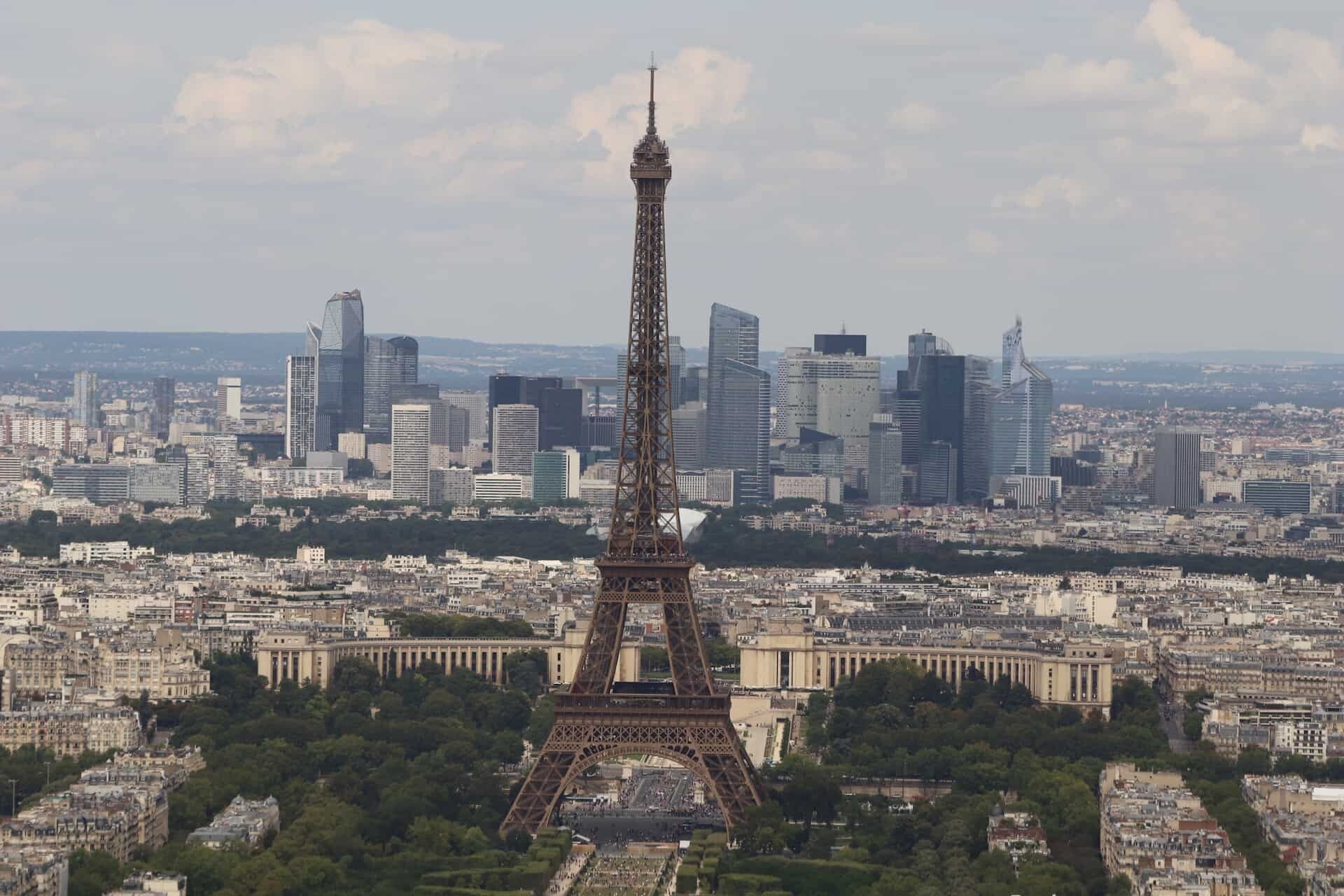
The Eiffel Tower, Paris
No structure on earth is more instantly recognisable than the Eiffel Tower. Rising 330 metres above the rooftops of Paris, this extraordinary iron masterpiece has become the ultimate symbol of France — and one of the most visited monuments in the entire world. Whether you are planning your first visit or simply want to learn about this iconic landmark, this complete guide tells you everything you need to know.
History
Gustave Eiffel
The Eiffel Tower was built for the Exposition Universelle — the World's Fair held in Paris in 1889 to celebrate the centennial of the French Revolution. It was designed and engineered by Gustave Eiffel, whose company had already earned an international reputation for bold iron construction, including the internal framework of the Statue of Liberty in New York.
When the project was announced, it was highly controversial. A group of prominent French artists and intellectuals — including the novelist Guy de Maupassant and the composer Charles Gounod — signed a petition calling it an eyesore, a "giant black factory chimney" that would disfigure the Paris skyline forever. History, of course, proved them spectacularly
Construction
Construction began in January 1887 and was completed in just two years, two months and five days — an extraordinary achievement for the time. At its completion in March 1889, the Eiffel Tower was the tallest man-made structure in the world, a record it held for 41 years until the construction of the Chrysler Building in New York in 1930.
The tower is made of 18,038 pieces of puddled iron, held together by 2.5 million rivets. Every single rivet hole was calculated in advance to a tolerance of one tenth of a millimetre. The entire structure weighs approximately 10,100 tonnes.
From Eyesore to Icon
Gustave Eiffel had originally been granted a permit for the tower to stand for only 20 years, after which it was to be dismantled. It was saved from demolition in 1909 because of its enormous value as a radio transmission tower. During World War I it played a crucial role in intercepting enemy communications.
Over the following decades, the Eiffel Tower gradually transformed from a controversial curiosity into the beloved symbol of Paris it is today. By the mid-20th century it had become the most visited paid monument in the world — a title it still holds.
Architecture
The Three Floors
The Eiffel Tower has three floors open to the public, each offering a different experience.
The First Floor sits at 57 metres above ground and features a glass floor offering a vertiginous view straight down to the Trocadéro gardens below. It also houses a permanent exhibition on the tower's history, a restaurant, and a champagne bar.
The Second Floor at 115 metres is the most popular destination for visitors, offering panoramic views over the entire city of Paris in every direction. On a clear day you can see up to 70 kilometres. This floor also houses the famous Jules Verne restaurant, one of the most prestigious dining experiences in Paris.
The Summit at 276 metres is the highest point accessible to visitors, featuring Gustave Eiffel's private apartment — complete with wax figures of Eiffel himself receiving Thomas Edison. The summit can only be reached by lift, not by stairs.
Key Facts
Height : 330 metres (including antenna)
Construction : 1887–1889
Architect/Engineer : Gustave Eiffel
Iron pieces : 18,038
Rivets : 2,500,000
Weight : 10,100 tonnes
Visitors per year : 7 million
Floors open to public : 3
The Light Show
Every evening after dark, the Eiffel Tower puts on its famous light show — 20,000 golden lights that make the tower sparkle for 5 minutes every hour on the hour. The show runs from dusk until 1:00am. Seeing the Tower sparkle from the Champ de Mars or the Trocadéro is one of the most magical experiences Paris has to offer — and it is completely free.
Opening Hours
Mid-June – early September : 9:00am – 12:45am daily
Rest of the year : 9:30am – 11:45pm daily
Stairs : Close earlier than the lifts
Last entry : 45 minutes before closing
Ticket Prices
Lift to the top (summit) : €32.40 adults | €16.20 ages 12–24 | €8.10 ages 4–11
Lift to 2nd floor : €22.40 adults | €11.20 ages 12–24 | €5.60 ages 4–11
Stairs to 2nd floor : €14.20 adults | €7.10 ages 12–24 | €3.60 ages 4–11
Free : Under 4s
Book your skip-the-line tickets → (lien GetYourGuide)
Getting There
Address : Champ de Mars, 5 Avenue Anatole France, 75007 Paris
Metro : Bir-Hakeim (line 6) or Trocadéro (lines 6 & 9)
RER : Champ de Mars – Tour Eiffel (line C)
Bus : Lines 42, 69, 82, 87
Tips for Your Visit
Book online : Always book timed entry tickets in advance — queues without a ticket can exceed 2 hours in summer
Best view : The Trocadéro gardens offer the finest view of the Tower — perfect for photographs
Light show : Free to watch from the Champ de Mars or Trocadéro every hour after dark
Best time : Sunset — watch the city turn golden then see the light show begin
Allow : 2 to 3 hours for a full visit including the summit
FAQ
How tall is the Eiffel Tower?
330 metres including the antenna. Without the antenna, the tower itself stands 300 metres tall.
When was the Eiffel Tower built?
Construction began in January 1887 and was completed in March 1889, in time for the World's Fair held in Paris that year.
How many steps are there to the top?
There are 1,665 steps to the top of the Eiffel Tower. However, stairs are only available to the second floor (674 steps). The summit is accessible by lift only.
What is the Eiffel Tower made of?
The Eiffel Tower is made of puddled iron — 18,038 pieces held together by 2.5 million rivets. It is painted every 7 years in a specially formulated "Eiffel Tower Brown" paint.
Is the Eiffel Tower free to visit?
Entry to the base of the Eiffel Tower and the Champ de Mars is free. To access the floors and the summit, tickets must be purchased. Always book online in advance.